The Power of Words
Inspiration/Source: Book Giant Steps by Tony Robbins, The Mindful Body by Ellen Langer, Gap Selling by Keenan, plus lived experience
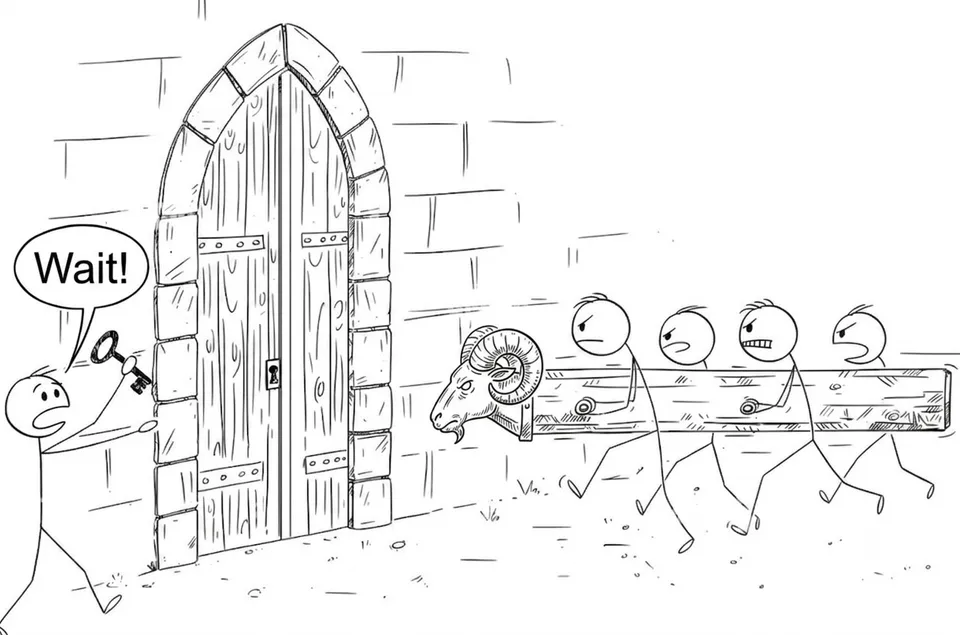
Drawing inspiration: Battering Ram by Zdenek Sasek
Would you take a hurricane more seriously if it was called Andrew, or if it was called Tanya?
Be honest :)
Obviously a storm doesn't care what it's called. Its name has no bearing on its intensity, wind speed, or destructiveness; but people hear a soft name and figure it's not that bad. That's most likely why hurricanes with female names kill more people.
Words have power, even small words. Whether it's a name or a little connecting word.
In 1977, Ellen Langer illustrated it in a famous study. She had people try to cut a copier line by saying:
- "Can I use the machine?" got 60% to say yes.
- "Can I use the machine because I'm in a rush?" jumped it to 94%.
- "Can I use the machine because I have to make copies?" Everyone in that line was there to make copies. It's not a reason at all. Still, 93% said yes.
The word "because" did the work, almost no matter what came after it. Words impact what we think and do, consciously and subconsciously.
For example, on a run last year I had Can't Hurt Me in my ears, David Goggins talking about pushing on when his mind was screaming at him to quit. Unexpectedly, this moved me. Literally. At some point I could feel my legs speeding up without consciously choosing to.
2 months later, I passed back on the same trail and boom: I went faster again. I didn't need Goggins' words in my ears this time, just the memory of them. That's the part that stuck with me: a word doesn't even have to be spoken to move you, the memory of it can be enough.
So here's the thing most people walk right past: you get to choose the words. And the right ones change what's actually real for you and your listeners. "This is a disaster" and "this could be better" describe the exact same moment, and they hand you two completely different days.
Word choice matters, for your reality and others'.
Naturally, good salespeople know this. In Gap Selling, Keenan explains that the best salespeople don't pitch features at people. Instead, they ask. "What happens if you keep going like this and change nothing?" Plain questions like that walk a prospect from where they are to where they want to be, so by the end the buyer is the one saying "I need this."
Used thoughtfully, words can be your keys to so many doors.